
List of words
The vocabulary list for "Abilities" with IPA British English transcription and Russian translation.
Verbs Related to Abilities
- can /kæn/ - мочь, уметь
- speak /spiːk/ - говорить
- write /raɪt/ - писать
- read /riːd/ - читать
- sing /sɪŋ/ - петь
- dance /dɑːns/ - танцевать
- swim /swɪm/ - плавать
- run /rʌn/ - бегать
- jump /dʒʌmp/ - прыгать
- cook /kʊk/ - готовить
- play /pleɪ/ - играть
- draw /drɔː/ - рисовать
- paint /peɪnt/ - писать красками, рисовать
- fix /fɪks/ - чинить
- repair /rɪˈpeər/ - ремонтировать
- ride /raɪd/ - ездить верхом, кататься
- use /juːz/ - пользоваться
- climb /klaɪm/ - лазать, забираться
Nouns Related to Abilities
- talent /ˈtæl.ənt/ - талант
- skill /skɪl/ - навык
- hobby /ˈhɒb.i/ - хобби
- practice /ˈpræk.tɪs/ - практика
- effort /ˈef.ət/ - усилие
- challenge /ˈtʃæl.ɪndʒ/ - вызов, сложная задача
Adjectives to Describe Abilities
- good /ɡʊd/ - хороший
- bad /bæd/ - плохой
- quick /kwɪk/ - быстрый
- slow /sləʊ/ - медленный
- easy /ˈiː.zi/ - лёгкий
- difficult /ˈdɪf.ɪ.kəlt/ - сложный
- talented /ˈtæl.ən.tɪd/ - талантливый
- skilled /skɪld/ - умелый, квалифицированный
- creative /kriˈeɪ.tɪv/ - творческий
Infographic
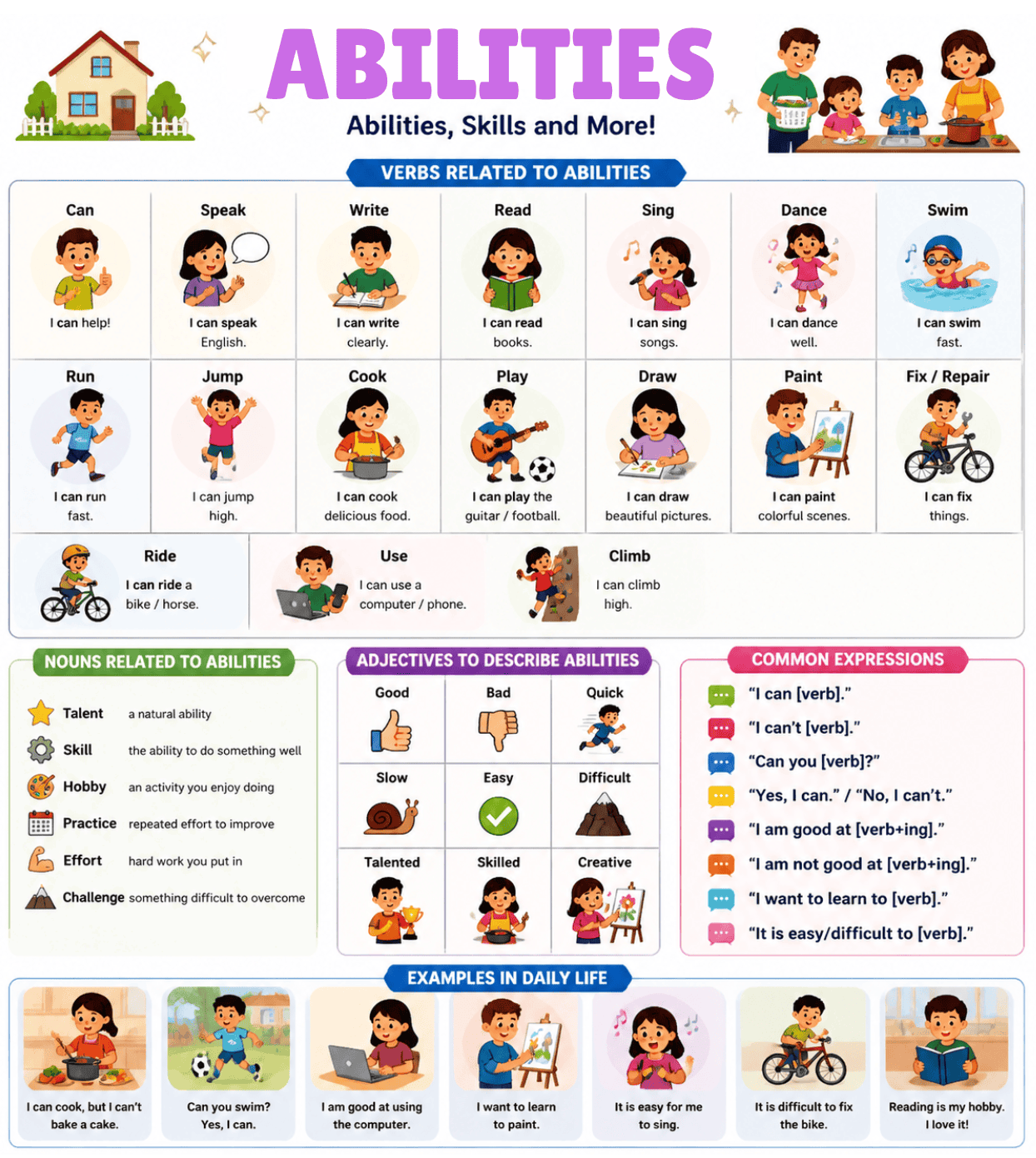
Introducing New Words
Everyone has different abilities. When we talk about what we can do, we use the word can. For example, I can swim, but I cannot play the piano. Some people speak two or three languages. They can write and read in each one. My sister loves music. She can sing very well and she can dance too. In summer, I like to go to the lake and swim. In the park, I like to run fast and jump over small walls.
У всех разные способности (abilities). Когда мы говорим о том, что мы можем (can) сделать, мы используем слово can. Например, я могу (can) плавать, но не могу (can) играть на пианино. Некоторые люди говорят (speak) на двух или трёх языках. Они могут (can) писать (write) и читать (read) на каждом из них. Моя сестра любит музыку. Она может (can) очень хорошо петь (sing) и также может (can) танцевать (dance). Летом я люблю ходить на озеро и плавать (swim). В парке я люблю быстро бегать (run) и прыгать (jump) через небольшие стены.
My mother can cook delicious meals. My father can play the guitar and he can play football. My friend is an artist. She can draw beautiful pictures and she can paint with watercolours. When something is broken, my grandfather can fix it or repair it. He can also ride a bike and ride a horse. Everyone in my family can use a computer and a use a phone. My little brother loves to climb trees in the garden.
Моя мама может (can) вкусно готовить (cook). Мой папа может (can) играть (play) на гитаре и может (can) играть (play) в футбол. Мой друг – художник. Она может (can) рисовать (draw) красивые картинки и может (can) писать красками (paint) акварелью. Когда что-то ломается, мой дедушка может (can) починить (fix/repair) это. Он также может (can) ездить верхом / кататься (ride) на велосипеде и ездить верхом / кататься (ride) на лошади. Все в моей семье могут (can) пользоваться (use) компьютером и пользоваться (use) телефоном. Мой младший брат любит лазать (climb) по деревьям в саду.
Some people have a special talent. A talent is something you are naturally good at. For example, singing can be a talent. A skill is something you learn to do well, like cooking or playing the piano. A hobby is an activity you do for fun, like painting or dancing. To get better at something, you need practice. If you practice every day, your skills improve. It also takes effort – you need to try hard. Sometimes learning a new ability is a challenge. A challenge is something difficult but exciting to try.
У некоторых людей есть особый талант (talent). Талант (talent) – это то, к чему у вас есть природная склонность. Например, пение может быть талантом (talent). Навык (skill) – это то, чему вы научились делать хорошо, например, готовить или играть на пианино. Хобби (hobby) – это занятие, которым вы занимаетесь для удовольствия, например, рисование или танцы. Чтобы стать лучше в чём-то, нужна практика (practice). Если вы практикуетесь (practice) каждый день, ваши навыки улучшаются. Также нужно усилие (effort) – вы должны стараться. Иногда изучение новой способности – это вызов (challenge). Вызов (challenge) – это что-то сложное, но захватывающее, что стоит попробовать.
We can use different words to describe how well someone does something. If you are good at maths, you understand it easily. If you are bad at singing, you may not want to sing in front of people.
Мы можем использовать разные слова, чтобы описать, насколько хорошо кто-то что-то делает. Если вы хороший (good) в математике, вы понимаете её легко. Если вы плохой (bad) в пении, вы, возможно, не захотите петь перед людьми.
Some people learn quick – they understand new things fast. Others are slow and need more time. Some activities are easy for one person but difficult for another. A talented person has a natural ability to do something well. A skilled person has learned to do something very well through practice. A creative person can make new things or think of new ideas.
Некоторые люди учатся быстро (quick) – они понимают новые вещи быстро. Другие – медленно (slow) и им нужно больше времени. Некоторые занятия лёгкие (easy) для одного человека, но сложные (difficult) для другого. Талантливый (talented) человек обладает природной способностью делать что-то хорошо. Умелый (skilled) человек научился делать что-то очень хорошо благодаря практике. Творческий (creative) человек может создавать новые вещи или придумывать новые идеи.
Everyone has different abilities. Some are born with them, and some we learn. With practice and effort, we can get better at anything we want to do.
У всех разные способности (abilities). Некоторые даны от рождения, а некоторым мы учимся. С практикой (practice) и усилием (effort) мы можем стать лучше в любом деле, которым хотим заниматься.
Vocabulary exercises
Match pairs
1
2
3
Recall the words
1
2
3
4
5
Fill in the blanks
1
2
3
4
5
Dialogues
Dialogue 1: New Friends
Anna: Hi! What languages can you speak?
Tom: I can speak English and a little Spanish. Can you speak Spanish?
Anna: No, I can't. But I want to learn to speak French.
Tom: That's a challenge. French is difficult.
Anna: Yes, but with practice and effort, I can learn.
Tom: I agree. I am good at reading, but I am not good at writing.
Anna: Writing is easy for me. Maybe I can help you.
Tom: Really? That would be great! And I can help you with Spanish.
Dialogue 1: New Friends (Новые друзья)
Анна: Привет! На каких языках ты умеешь говорить (can speak)?
Том: Я умею говорить (can speak) по-английски и немного по-испански. А ты умеешь говорить (can speak) по-испански?
Анна: Нет, не умею (can't). Но я хочу научиться (want to learn) говорить (speak) по-французски.
Том: Это сложно (challenge). Французский трудный (difficult).
Анна: Да, но с практикой (practice) и усилиями (effort) я могу (can) выучить.
Том: Согласен. Я хорош в (am good at) чтении (reading), но я не хорош в (am not good at) письме (writing).
Анна: Письмо (Writing) легко (easy) для меня. Может быть, я могу (can) помочь тебе.
Том: Правда? Это было бы здорово! А я могу (can) помочь тебе с испанским.
Dialogue 2: Talents and Hobbies
Mom: Your drawings are beautiful! You are very talented.
Daughter: Thank you, Mom. I love to draw and paint. It's my hobby.
Mom: Can you draw a picture of our house?
Daughter: Yes, I can. It is easy for me. I am also good at singing.
Mom: Really? Can you sing a song for me?
Daughter: (sings a short song) How was that?
Mom: Wonderful! You are a skilled singer too. What about dancing?
Daughter: I can dance a little, but I am not good at it. I am slow.
Mom: That's OK. You can't be good at everything. Practice makes progress.
Dialogue 2: Talents and Hobbies (Таланты и хобби)
Мама: Твои рисунки прекрасны! Ты очень талантлива (talented).
Дочь: Спасибо, мама. Я люблю рисовать (draw) и писать красками (paint). Это моё хобби (hobby).
Мама: Ты можешь (can) нарисовать наш дом?
Дочь: Да, могу (can). Это легко (easy) для меня. Я также хороша в (am good at) пении (singing).
Мама: Правда? Ты можешь (can) спеть мне песню?
Дочь: (поёт короткую песню) Как это было?
Мама: Замечательно! Ты ещё и искусная (skilled) певица. А что насчёт танцев (dancing)?
Дочь: Я могу (can) немного танцевать (dance), но я не хороша в (am not good at) этом. Я медленная (slow).
Мама: Ничего страшного. Нельзя быть хорошим (good) во всём. Практика приносит прогресс.
Dialogue 3: Sports and Physical Abilities
Ben: Let's play outside! Can you run fast?
Lisa: Yes, I can. I am quick. Can you jump high?
Ben: No, I can't. Jumping is difficult for me. But I can climb trees.
Lisa: That's a great skill! I can swim, but I can't climb.
Ben: Can you ride a bike?
Lisa: Yes, I can. I learned last summer. Can you?
Ben: No, I can't. I want to learn to ride a bike. My brother can fix bikes. He can repair anything.
Lisa: That's a useful talent. Let's ask him to teach us both!
Dialogue 3: Sports and Physical Abilities (Спорт и физические способности)
Бен: Давай поиграем на улице! Ты умеешь быстро бегать (can run fast)?
Лиза: Да, умею (can). Я быстрая (quick). А ты умеешь высоко прыгать (can jump high)?
Бен: Нет, не умею (can't). Прыгать (Jumping) трудно (difficult) для меня. Но я умею лазать (can climb) по деревьям.
Лиза: Это отличный навык (skill)! Я умею плавать (can swim), но не умею лазать (can't climb).
Бен: Ты умеешь кататься (can ride) на велосипеде?
Лиза: Да, умею (can). Я научилась прошлым летом. А ты умеешь (can)?
Бен: Нет, не умею (can't). Я хочу научиться (I want to learn) кататься на велосипеде. Мой брат умеет чинить (can fix) велосипеды. Он может починить (can repair) что угодно.
Лиза: Это полезный талант (talent). Давай попросим его научить нас обеих!
Dialogue 4: Learning New Skills
Teacher: Good morning, class. Today let's talk about abilities. What can you do?
Student 1: I can cook simple dishes like eggs and pasta.
Teacher: That's great. Are you good at cooking?
Student 1: Yes, I am good at it. It's easy for me.
Teacher: And you? What is your talent?
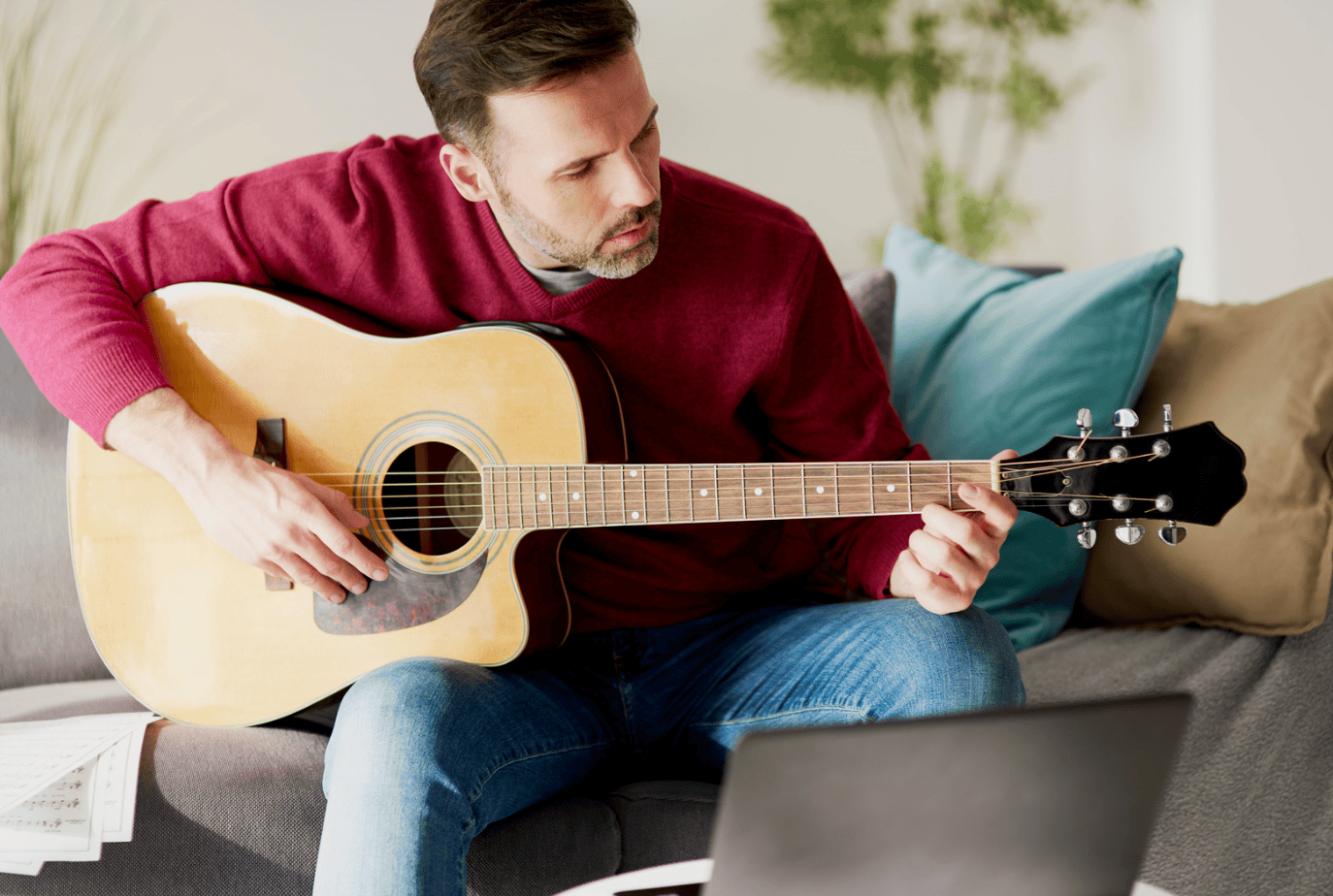
Student 2: I can play the guitar. I practice every day.
Teacher: That takes a lot of effort. Is it difficult?
Student 2: At first, yes. But now it is easier.
Teacher: What about you? Can you use a computer?
Student 3: Yes, I can. I can use a computer and a phone. I am creative with design.
Teacher: Wonderful. Remember, everyone has different skills. Some things are easy, some are difficult. But with practice, you can learn anything.
Dialogue 4: Learning New Skills (Изучение новых навыков)
Учитель: Доброе утро, класс. Сегодня давайте поговорим о способностях (abilities). Что вы умеете делать (can do)?
Ученик 1: Я умею готовить (can cook) простые блюда, например яйца и пасту.
Учитель: Это здорово. Ты хорош в (are you good at) приготовлении еды (cooking)?
Ученик 1: Да, я хорош в (am good at) этом. Это легко (easy) для меня.
Учитель: А ты? Какой у тебя талант (talent)?
Ученик 2: Я умею играть (can play) на гитаре. Я практикуюсь (practice) каждый день.
Учитель: Это требует больших усилий (effort). Это трудно (difficult)?
Ученик 2: Сначала да. Но сейчас стало легче (easier).
Учитель: А что насчёт тебя? Ты умеешь пользоваться (can use) компьютером?
Ученик 3: Да, умею (can). Я умею пользоваться (can use) компьютером и телефоном. Я креативен (creative) в дизайне.
Учитель: Замечательно. Помните, у каждого разные навыки (skills). Одни вещи легки (easy), другие трудны (difficult). Но с практикой (practice) вы можете (can) выучить всё.
Additional exercises
1. Complete the sentences
2. Definitions
Exercise 1
Exercise 2
3. Context
Exercise 1
Exercise 2
Exercise 3
Listening
Reading
Dialogue: A Conversation About Abilities
Anna: Hi, Tom! What are your hobbies?
Tom: Hi, Anna! I like to play the guitar and swim. What about you?
Anna: That’s cool! I can’t play the guitar, but I can sing a little. Are you good at swimming?
Tom: Yes, I’m pretty good at swimming. I practice every week. What about you? Can you swim?
Anna: No, I can’t swim. It’s difficult for me. But I want to learn!
Tom: That’s great! Swimming is easy for me, but I need more practice to play the guitar.
Anna: I understand. Playing an instrument is not easy. I can draw and paint, though.
Tom: Really? Are you good at painting?
Anna: Yes, I’m good at painting. It’s my favorite hobby. I’m also creative, so I enjoy it.
Tom: That’s amazing! I can’t draw at all. It’s too difficult for me.
Anna: Don’t worry. Everyone has different talents. What else can you do?
Tom: I can ride a bike and use a computer well. But I can’t cook. It’s a big challenge for me.
Anna: Oh, I can cook! It’s easy for me. Maybe I can teach you someday.
Tom: That would be great! I want to learn to cook.
Anna: Sure! And maybe you can teach me to swim.
Tom: Deal! With a little effort and practice, we can both learn new skills.
Anna: Exactly! What’s easy for you but difficult for me might be the other way around.
Tom: True. Let’s help each other.
Anna: Sounds like a plan!
Speaking
1. Sentence patterns
Learn the sentence patterns how to speak about abilities. Tell about yourself using the sentence patterns.
Talking About Abilities
- "I can [verb]."Example: "I can swim."
- "I can’t [verb]."Example: "I can’t play the guitar."
- "I am good at [verb+ing]."Example: "I am good at dancing."
- "I am not good at [verb+ing]."Example: "I am not good at drawing."
- "It is easy/difficult for me to [verb]."Example: "It is easy for me to cook."
Asking Questions About Abilities
- "Can you [verb]?"Example: "Can you ride a bike?"
- "What can you do?"
- "Are you good at [verb+ing]? "Example: "Are you good at swimming?"
- "What is easy/difficult for you? "Example: "What is difficult for you?"
Expressing Desire to Learn
- "I want to learn to [verb]."Example: "I want to learn to play the piano."
- "I would like to get better at [verb+ing]."Example: "I would like to get better at running."
- "I need more practice to [verb]."Example: "I need more practice to speak English."
2. Answer the questions
- Can you swim?
- What can you do?
- What can't you do?
- What are you good at?
- What are you bad at?
- What do you want to learn?
- What would you like to get better at?
- Do you need more practice to speak English?
Writing
Write about your abilities
Write a short essay about your abilities. Use the outline below.
1. Introduction: Start with a General Statement
Introduce yourself and mention what you’re going to talk about. Example:
- "Hi, my name is [Your Name]. I’d like to tell you about my abilities and skills."
- "Today, I want to share what I can do and what I’m good at."
2. Talk About Your Strengths (What You Can Do)
Use phrases like:
- "I can [verb]."
- "I am good at [verb+ing]."
- "It is easy for me to [verb]."
Mention 2-3 things you’re good at (e.g., hobbies, skills, or talents). Example:
- "I can play the piano and sing. I’m also good at drawing and painting."
- "It’s easy for me to use a computer, and I’m good at solving problems."
3. Mention Challenges (What You Can’t Do or Find Difficult)
Use phrases like:
- "I can’t [verb]."
- "I am not good at [verb+ing]."
- "It is difficult for me to [verb]."
Mention 1-2 things you find challenging or want to improve. Example:
- "I can’t swim, and I’m not good at cooking."
- "It’s difficult for me to speak in public, but I’m practicing."
4. Share Your Goals (What You Want to Learn or Improve)
Use phrases like:
- "I want to learn to [verb]."
- "I would like to get better at [verb+ing]."
- "I need more practice to [verb]."
Mention 1-2 things you’re interested in learning or improving. Example:
- "I want to learn to play the guitar and get better at swimming."
- "I need more practice to speak English fluently."
5. Conclusion: Wrap It Up
End with a positive statement or summary. Example:
- "Everyone has different abilities, and I’m happy with what I can do. I’m excited to learn more!"
- "That’s all about my abilities. I hope to keep improving and learning new things."
Example of how to talk about your abilities:
Introduction:
"Hi, my name is Sara. Today, I want to tell you about my abilities and what I’m good at."
Strengths:
"I can play the piano and sing. I’m also good at drawing and painting. It’s easy for me to use a computer, and I enjoy solving problems."
Challenges:
"I can’t swim, and I’m not good at cooking. It’s difficult for me to speak in front of a big group, but I’m practicing."
Goals:
"I want to learn to play the guitar and get better at swimming. I also need more practice to speak English fluently."
Conclusion:
"Everyone has different abilities, and I’m happy with what I can do. I’m excited to keep learning and improving!"
