
List of words
The vocabulary list for "Crime" with IPA British English transcription and Russian translation.
Types of Crime
- crime /kraɪm/ - преступление
- theft /θeft/ - кража
- robbery /ˈrɒb.ər.i/ - разбой / грабёж
- burglary /ˈbɜː.ɡlər.i/ - кража со взломом
- stealing /ˈstiː.lɪŋ/ - воровство
- shoplifting /ˈʃɒp.lɪf.tɪŋ/ - магазинная кража
- vandalism /ˈvæn.dəl.ɪ.zəm/ - вандализм
- murder /ˈmɜː.dər/ - убийство
- assault /əˈsɒlt/ - нападение
- fraud /frɔːd/ - мошенничество
- drink-driving /ˈdrɪŋk ˌdraɪ.vɪŋ/ - вождение в нетрезвом виде
People Involved in Crime
- criminal /ˈkrɪm.ɪ.nəl/ - преступник
- thief /θiːf/ - вор
- robber /ˈrɒb.ər/ - грабитель
- burglar /ˈbɜː.ɡlər/ - взломщик
- shoplifter /ˈʃɒp.lɪf.tər/ - магазинный вор
- murderer /ˈmɜː.dər.ər/ - убийца
- victim /ˈvɪk.tɪm/ - жертва
- witness /ˈwɪt.nəs/ - свидетель
- suspect /ˈsʌs.pekt/ - подозреваемый
- police officer /pəˈliːs ˌɒf.ɪ.sər/ - полицейский
Law Enforcement & Justice System
- police /pəˈliːs/ - полиция
- detective /dɪˈtek.tɪv/ - детектив
- lawyer /ˈlɔː.jər/ - адвокат
- judge /dʒʌdʒ/ - судья
- court /kɔːt/ - суд
- prison /ˈprɪz.ən/ - тюрьма
- jail /dʒeɪl/ - тюрьма / изолятор
Actions & Processes
- commit a crime /kəˈmɪt ə kraɪm/ - совершить преступление
- break the law /breɪk ðə lɔː/ - нарушить закон
- catch /kætʃ/ - поймать
- arrest /əˈrest/ - арестовать
- investigate /ɪnˈves.tɪ.ɡeɪt/ - расследовать
- question /ˈkwes.tʃən/ - опрашивать
- find evidence /faɪnd ˈev.ɪ.dəns/ - найти улики
- accuse /əˈkjuːz/ - обвинять
- prove /pruːv/ - доказывать
- confess /kənˈfes/ - признаваться
- punish /ˈpʌn.ɪʃ/ - наказывать
Punishments
- fine /faɪn/ - штраф
- prison sentence /ˈprɪz.ən ˈsen.təns/ - тюремный срок
- community service /kəˈmjuː.nə.ti ˈsɜː.vɪs/ - общественные работы
Adjectives & Describing Words
- guilty /ˈɡɪl.ti/ - виновный
- innocent /ˈɪn.ə.sənt/ - невиновный
- illegal /ɪˈliː.ɡəl/ - незаконный
- legal /ˈliː.ɡəl/ - законный
Infographic
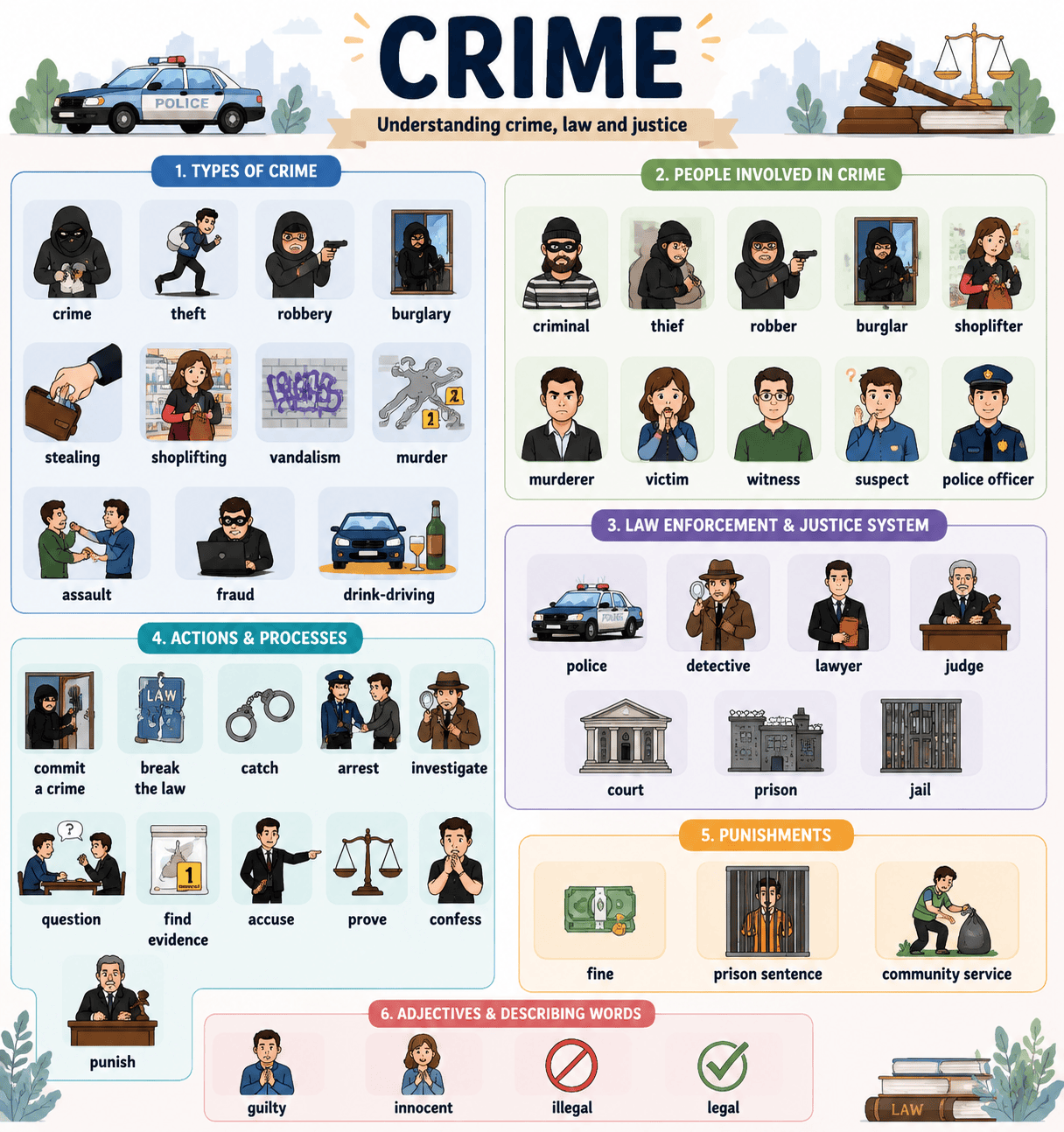
Introducing New Words
What Is Crime?
A crime is an action that is against the law. When someone does something illegal, they break the law. Different types of crime happen every day.
Theft is when someone takes something that does not belong to them. Stealing is the same as theft. Robbery is worse because the person uses force or threats. Burglary is when someone breaks into a house or a building to steal things. Shoplifting is when someone steals things from a shop. Vandalism is when someone damages or destroys public or private property. Murder is when someone kills another person on purpose. Assault is when someone physically attacks another person. Fraud is when someone lies to get money or property illegally. Drink-driving is when someone drives a car after drinking too much alcohol.
What Is Crime? (Что такое преступление?)
Преступление (crime) — это действие, которое противоречит закону. Когда кто-то делает что-то незаконное, он нарушает закон (breaks the law). Разные виды преступлений (crimes) случаются каждый день.
Кража (Theft) — это когда кто-то берёт то, что ему не принадлежит. Воровство (Stealing) — это то же самое, что и кража (theft). Разбой (Robbery) — это хуже, потому что человек применяет силу или угрозы. Кража со взломом (Burglary) — это когда кто-то проникает в дом или здание, чтобы украсть вещи. Магазинная кража (Shoplifting) — это когда кто-то ворует вещи из магазина. Вандализм (Vandalism) — это когда кто-то повреждает или уничтожает частную или государственную собственность. Убийство (Murder) — это когда кто-то намеренно убивает другого человека. Нападение (Assault) — это когда кто-то физически атакует другого человека. Мошенничество (Fraud) — это когда кто-то лжёт, чтобы незаконно получить деньги или имущество. Вождение в нетрезвом виде (Drink-driving) — это когда кто-то ведёт машину после употребления слишком большого количества алкоголя.
People Involved in Crime
A criminal is a person who commits a crime. A thief is a person who steals things. A robber is a person who takes things using force or threats. A burglar is a person who breaks into buildings to steal. A shoplifter is a person who steals from shops. A murderer is a person who kills another person on purpose.
The victim is the person who suffers because of a crime. A witness is a person who sees a crime happen. A suspect is a person who may have committed the crime. A police officer is a person who catches criminals and keeps people safe.
People Involved in Crime (Люди, причастные к преступлению)
Преступник (criminal) — это человек, который совершает преступление (crime). Вор (thief) — это человек, который ворует вещи. Грабитель (robber) — это человек, который забирает вещи с помощью силы или угроз. Взломщик (burglar) — это человек, который проникает в здания, чтобы украсть. Магазинный вор (shoplifter) — это человек, который ворует из магазинов. Убийца (murderer) — это человек, который намеренно убивает другого человека.
Жертва (victim) — это человек, который страдает из-за преступления (crime). Свидетель (witness) — это человек, который видит, как совершается преступление (crime). Подозреваемый (suspect) — это человек, который, возможно, совершил преступление (crime). Полицейский (police officer) — это человек, который ловит преступников (criminals) и обеспечивает безопасность людей.
Law Enforcement and Justice
The police are the official organisation that catches criminals. A detective is a police officer who investigates crimes. A lawyer helps people understand and use the law. A judge decides the punishment in a court. A court is the place where legal cases are decided. Prison is a place where criminals are kept as punishment. Jail is another word for prison, but it is often for short sentences or while people wait for their trial.
Law Enforcement and Justice (Правоохранительные органы и правосудие)
Полиция (police) — это официальная организация, которая ловит преступников (criminals). Детектив (detective) — это полицейский (police officer), который расследует преступления (crimes). Адвокат (lawyer) помогает людям понимать и использовать закон. Судья (judge) назначает наказание в суде (court). Суд (court) — это место, где решаются юридические дела. Тюрьма (prison) — это место, где преступники (criminals) содержатся в качестве наказания. Тюрьма (jail) — это другое слово для обозначения тюрьмы (prison), но часто для коротких сроков или пока люди ждут суда.
Actions and Processes
When someone does something illegal, they commit a crime. They break the law. The police try to catch the criminal. They arrest the suspect and take them to the police station. The detective works to investigate the crime. They question the witness and the suspect. They try to find evidence – facts or objects that prove a crime happened. The lawyer may accuse someone of the crime or try to prove they are innocent. Sometimes the criminal confesses – they admit that they committed the crime. The judge decides how to punish the criminal.
Actions and Processes (Действия и процессы)
Когда кто-то делает что-то незаконное, он совершает преступление (commits a crime). Он нарушает закон (breaks the law). Полиция (police) пытается поймать (catch) преступника (criminal). Они арестовывают (arrest) подозреваемого (suspect) и доставляют его в полицейский участок. Детектив (detective) работает, чтобы расследовать (investigate) преступление (crime). Он опрашивает (questions) свидетеля (witness) и подозреваемого (suspect). Он пытается найти улики (find evidence) — факты или предметы, которые доказывают, что преступление (crime) произошло. Адвокат (lawyer) может обвинить (accuse) кого-то в преступлении (crime) или попытаться доказать (prove), что он невиновен (innocent). Иногда преступник (criminal) признаётся (confesses) — он признаёт, что совершил преступление (crime). Судья (judge) решает, как наказать (punish) преступника (criminal).
Punishments
A fine is money a person must pay as a punishment. A prison sentence is a period of time in prison. Community service is when a person works for free to help the community as a punishment.
Describing Words
If a person committed the crime, they are guilty. If they did not commit the crime, they are innocent. Something that is against the law is illegal. Something that is allowed by the law is legal.
Punishments (Наказания)
Штраф (fine) — это деньги, которые человек должен заплатить в качестве наказания (punishment). Тюремный срок (prison sentence) — это период времени в тюрьме (prison). Общественные работы (community service) — это когда человек бесплатно работает, чтобы помочь обществу, в качестве наказания (punishment).
Describing Words (Слова-описания)
Если человек совершил преступление (crime), он виновен (guilty). Если он не совершал преступления (crime), он невиновен (innocent). То, что противоречит закону, является незаконным (illegal). То, что разрешено законом, является законным (legal).
Example Story
Last week, a burglar committed burglary. He broke into a house and committed theft – he stole a laptop. The victim called the police. A police officer and a detective came to investigate. They questioned a suspect. The suspect was innocent, so they let him go. Then a witness told the police what he saw. The detective found evidence – a fingerprint. The police arrested the real criminal. In court, the judge listened to the lawyer and the witness. The criminal confessed to the crime. The judge said he was guilty and gave him a prison sentence of two years. Crime is illegal, and criminals must be punished so that citizens can be safe.
Example Story (Пример-история)
На прошлой неделе взломщик (burglar) совершил кражу со взломом (burglary). Он проник в дом и совершил кражу (theft) — он украл ноутбук. Жертва (victim) вызвала полицию (police). Полицейский (police officer) и детектив (detective) приехали, чтобы расследовать (investigate). Они опросили (questioned) подозреваемого (suspect). Подозреваемый (suspect) был невиновен (innocent), поэтому они отпустили его. Затем свидетель (witness) рассказал полиции (police) о том, что он видел. Детектив (detective) нашёл улики (found evidence) — отпечаток пальца. Полиция (police) арестовала (arrested) настоящего преступника (criminal). В суде (court) судья (judge) выслушал адвоката (lawyer) и свидетеля (witness). Преступник (criminal) признался (confessed) в преступлении (crime). Судья (judge) сказал, что он виновен (guilty), и приговорил его к тюремному сроку (prison sentence) на два года. Преступление (Crime) — это незаконно (illegal), и преступники (criminals) должны быть наказаны (punished), чтобы граждане (citizens) были в безопасности (safe).
Vocabulary exercises
Match pairs
1
2
3
4
5
Fill in the blanks
1
2
3
4
5
6
7
Recall the words
1
2
3
4
5
6
7
Dialogues
Dialogue 1: At the Police Station
Police officer: Good morning. Why are you here?
Victim: Someone broke into my house last night. It was a burglary.
Police officer: I'm sorry to hear that. Did you see the burglar?
Victim: No, but my neighbour is a witness. She saw a man run away.
Police officer: We will investigate the crime. Can you describe the man?
Victim: He was tall and wore a black hoodie.
Police officer: We have a suspect. We will question him today.
Victim: Thank you. I hope you catch him.
Police officer: We will do our best. If he is guilty, he will go to prison.
Dialogue 1: At the Police Station (В полицейском участке)
Полицейский (Police officer): Доброе утро. Зачем вы здесь?
Жертва (Victim): Кто-то проник в мой дом прошлой ночью. Это была кража со взломом (burglary).
Полицейский (Police officer): Мне жаль это слышать. Вы видели взломщика (burglar)?
Жертва (Victim): Нет, но моя соседка - свидетель (witness). Она видела, как мужчина убегал.
Полицейский (Police officer): Мы расследуем (investigate) преступление (crime). Вы можете описать мужчину?
Жертва (Victim): Он был высоким и носил чёрную толстовку с капюшоном.
Полицейский (Police officer): У нас есть подозреваемый (suspect). Мы опросим (question) его сегодня.
Жертва (Victim): Спасибо. Я надеюсь, вы поймаете (catch) его.
Полицейский (Police officer): Мы сделаем всё возможное. Если он виновен (guilty), он отправится в тюрьму (prison).
Dialogue 2: In the Court
Judge: Please stand up. You are accused of theft. Are you guilty or innocent?
Defendant: Innocent, Your Honour. I did not take the phone.
Lawyer: My client did not commit a crime. We can prove he was at home.
Judge: The witness says she saw you take the phone.
Defendant: That is not true. She is lying.
Judge: Do you have any evidence?
Lawyer: Yes. Here is a video showing my client in a different place at that time.
Judge: I see. The suspect is innocent. Case closed.
Defendant: Thank you!
Dialogue 2: In the Court (В суде)
Судья (Judge): Пожалуйста, встаньте. Вас обвиняют в краже (theft). Вы виновны (guilty) или невиновны (innocent)?
Подсудимый: Невиновен (Innocent) , Ваша Честь. Я не брал телефон.
Адвокат (Lawyer): Мой клиент не совершал преступления (commit a crime). Мы можем доказать (prove) , что он был дома.
Судья (Judge): Свидетель (witness) говорит, что видела, как вы взяли телефон.
Подсудимый: Это неправда. Она лжёт.
Судья (Judge): У вас есть улики (evidence)?
Адвокат (Lawyer): Да. Вот видео, показывающее, что мой клиент был в другом месте в то время.
Судья (Judge): Понятно. Подозреваемый (suspect) невиновен (innocent). Дело закрыто.
Подсудимый: Спасибо!
Dialogue 3: On the Street
Person 1: What happened here? Why are there so many police?
Person 2: There was a robbery at the bank. A robber took money and ran away.
Person 1: Did anyone get hurt? Was there assault?
Person 2: No, but a security guard tried to catch him. The robber pushed him, but no one was injured.
Person 1: That's terrible. I hope they arrest him soon.
Person 2: The detective is already working on the case. He is investigating.
Person 1: What will happen if they catch him?
Person 2: He will go to court and the judge will decide his punishment. He might get a prison sentence.
Person 1: Good. Crime should be punished.
Dialogue 3: On the Street (На улице)
Человек 1: Что здесь случилось? Почему здесь так много полиции (police)?
Человек 2: В банке произошёл разбой (robbery). Грабитель (robber) взял деньги и убежал.
Человек 1: Кто-нибудь пострадал? Было ли нападение (assault)?
Человек 2: Нет, но охранник попытался поймать (catch) его. Грабитель (robber) толкнул его, но никто не пострадал.
Человек 1: Это ужасно. Я надеюсь, они скоро арестуют (arrest) его.
Человек 2: Детектив (detective) уже работает над этим делом. Он расследует (investigating) .
Человек 1: Что будет, если они поймают (catch) его?
Человек 2: Он предстанет перед судом (court) , и судья (judge) решит его наказание (punishment). Он может получить тюремный срок (prison sentence).
Человек 1: Хорошо. Преступление (Crime) должно наказываться (punished).
Dialogue 4: At Home
Mother: I heard there was more vandalism in our neighbourhood last night.
Son: Yes, someone broke the windows of the school. That is illegal.
Mother: It is. Some people don't respect the law. They break the law for no reason.
Son: What about shoplifting? I saw a video of a shoplifter taking candy from a shop.
Mother: Stealing is always wrong. If you steal, you are a thief.
Son: What happens if someone confesses to a crime?
Mother: The judge might give a smaller punishment, like a fine or community service.
Son: That seems fair. I will always follow the law. I don't want to go to jail or prison.
Mother: That's my good child. Always be legal and stay innocent.
Dialogue 4: At Home (Дома)
Мама: Я слышала, прошлой ночью в нашем районе снова был вандализм (vandalism).
Сын: Да, кто-то разбил окна в школе. Это незаконно (illegal).
Мама: Это так. Некоторые люди не уважают закон. Они нарушают закон (break the law) без причины.
Сын: А что насчёт магазинной кражи (shoplifting)? Я видел видео, как магазинный вор (shoplifter) брал конфеты в магазине.
Мама: Воровство (Stealing) - это всегда неправильно. Если ты воруешь (steal) , ты вор (thief).
Сын: Что происходит, если кто-то признаётся (confesses) в преступлении (crime)?
Мама: Судья (Judge) может назначить меньшее наказание (punishment) , например штраф (fine) или общественные работы (community service) .
Сын: Это справедливо. Я всегда буду соблюдать закон. Я не хочу попасть в тюрьму (jail) или тюрьму (prison).
Мама: Вот мой хороший ребёнок. Всегда будь законопослушным (legal) и оставайся невиновным (innocent).
